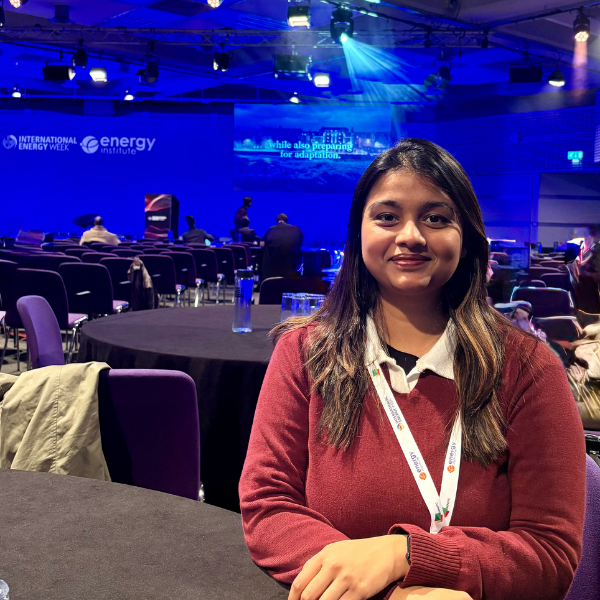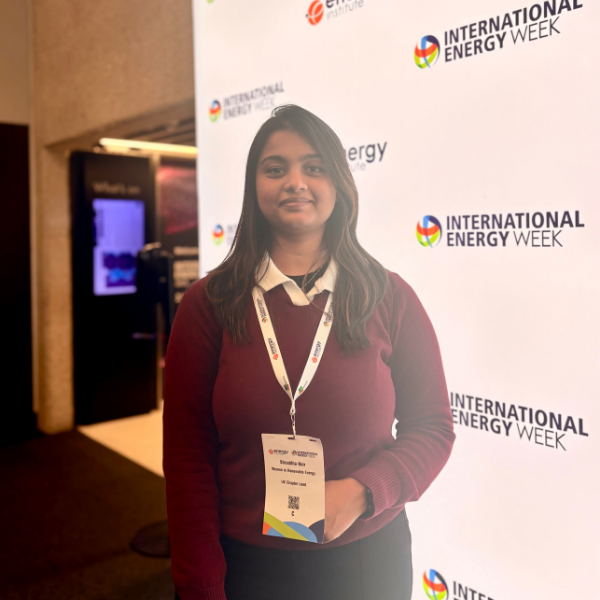
Shraddha Nair, Women in Renewable Energy UK Chapter Lead at International Energy Week
Executive Summary
International Energy Week 2026 signaled a definitive shift in the global energy discourse. The conversation has moved beyond the "if" of the energy transition to the "how"—focusing on the speed and boldness required to redesign global systems for resilience, competitiveness, and sustainability. This report outlines the strategic themes identified over the two-day summit, highlighting that decarbonization is now inextricably linked to national security and economic sovereignty.
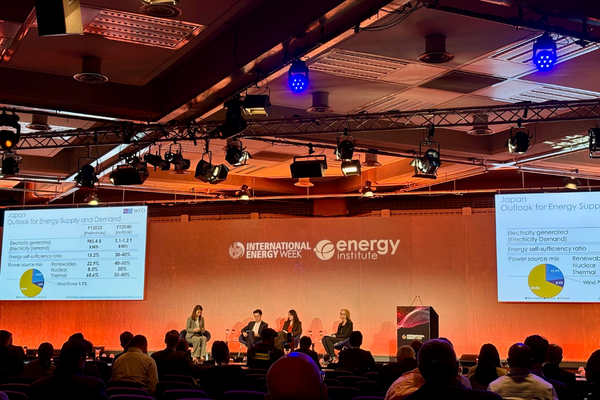
Day 1: Resilience, Security, and Strategic Imperatives
The first day focused on the integration of net-zero goals with national security, framing the energy transition as a strategic necessity rather than a purely environmental one.
1. The Death of the "Net Zero vs. Security" Debate
The UK’s grid transformation demonstrates that resilience and decarbonization are now interdependent. The transition to clean energy is the primary vehicle for achieving long-term energy security.
2. Industrial Competitiveness and Regulatory Inertia
High electricity prices for industry were identified as a symptom of a slow transition. Planning and regulatory delays are currently the primary barriers to unlocking cheap, localized clean power at industrial hubs and ports.
3. Data Centers as System Litmus Tests
Data centers represent a critical planning challenge.
Success: When integrated with renewables and flexibility, they lower system costs.
Failure: Poorly sited facilities expose and exacerbate existing grid weaknesses.
4. Lessons from Ukraine: Decentralization as Survival
Ukraine provided a profound case study in energy resilience. While centralized fossil fuel infrastructure proved vulnerable to attack, decentralized clean energy (distributed solar, storage, and wind) kept communities powered under fire.
Key Takeaway: Delaying the energy transition is no longer a "safe" middle ground; it is the riskiest economic and security choice a nation can make.
Day 2: Global Markets, Sovereignty, and Inclusive Leadership
Day 2 shifted the lens toward emerging markets, the geopolitics of energy, and the vital role of diverse leadership in driving innovation.
1. Energy Sovereignty in Emerging Markets
Emerging economies growing at 6–8% face a structural risk if they remain dependent on imported energy. For these nations, the transition is a matter of energy sovereignty—building domestic capacity to fuel rapid economic growth.
2. Strategic Growth for WiRE: The Kuwait Prospect
A significant engagement with the Kuwait Oil Corporation revealed a strong interest in establishing a WiRE Kuwait chapter. There is a clear appetite for elevating female leadership in the Middle East and increasing WiRE’s visibility at the Kuwait Oil & Gas Show and Conference (KOGS).
3. EDI as a Strategic Enabler
The "Equality, Diversity, and Inclusion" (EDI) session emphasized that a successful transition requires a workforce that reflects society. Diversity is not a "box-ticking" exercise but a strategic driver of innovation.
4. Economic Value in the African Energy Sector
Discussions focused on shifting away from extractive legacy practices. For example, ending gas flaring was framed as a multi-billion-dollar revenue opportunity, turning environmental waste into productive economic value.
5. Analytical Perspectives: US Trajectories and Geopolitics
A session led by Melissa Stark (Accenture) and Tristan Abbey (Former US Senate Advisor) provided a deep dive into US energy modeling:
Structural Shifts: Analysis of long-term supply, demand, and technology adoption.
Geopolitical Factors: Examination of how the current situation in Venezuela and production uncertainties are influencing US import patterns and short-term oil market dynamics.

The 2026 International Energy Week confirmed that the energy transition is the backbone of the modern economy. For WiRE, the interest from regions like Kuwait and the emphasis on EDI as a driver of innovation present a timely opportunity to expand our global influence and lead the conversation on inclusive, resilient energy systems.