Inside Africa's First Direct Air Capture Plant: WiRE Kenya Visits Octavia Carbon
““17 women from the Women in Renewable Energy (WiRE) Kenya network visited Octavia Carbon to explore the engineering behind Direct Air Capture (DAC), learn how carbon dioxide can be permanently removed from the atmosphere, and witness one of Africa’s most pioneering climate technologies being developed by Kenyan engineers””
On 27 June 2026, Women in Renewable Energy (WiRE) Kenya brought together 17 women professionals for a unique technical site visit to Octavia Carbon, Africa’s first Direct Air Capture (DAC) company.
The visit offered members an opportunity to step inside a pioneering climate technology facility, understand how carbon dioxide can be removed directly from the atmosphere, and engage with the engineers building this technology here in Kenya.
For many participants, the experience represented more than a technical tour. It was a chance to see firsthand how innovation, engineering and climate action are converging to create solutions for one of the world’s greatest challenges.

Octavia Carbon's Engineer Jeniffer Explaining the Direct Air Capture Process to WiRE members
Understanding Direct Air Capture
Carbon dioxide is one of the primary greenhouse gases contributing to climate change. While reducing emissions remains the most important priority, scientists increasingly recognize that removing some carbon dioxide already present in the atmosphere will also be necessary to achieve global climate goals.
Direct Air Capture is one of the few technologies designed specifically for this purpose. Unlike traditional carbon capture systems that capture CO₂ from industrial sources such as power plants, Direct Air Capture removes carbon dioxide directly from ambient air.
The challenge is that carbon dioxide exists in the atmosphere at relatively low concentrations, meaning enormous volumes of air must be processed. Developing an efficient system requires advances across multiple engineering disciplines including chemical engineering, mechanical systems, process control, energy integration and materials science.
This is the challenge Octavia Carbon is tackling.
Why Kenya?
Kenya offers several unique advantages for developing carbon removal technology. The country’s volcanic geology has created extensive basalt formations that can support permanent geological storage. Once captured CO₂ is injected underground, it can react with minerals in basalt through a process known as mineralization, converting the gas into stable carbonate minerals. This provides an opportunity for permanent storage without requiring transportation of CO₂ over long distances.
Kenya’s geothermal resources also provide an important advantage. The Direct Air Capture process requires heat during the regeneration stage, where captured CO₂ is released from the filter material. Geothermal energy offers a reliable renewable heat source that can reduce the carbon intensity and operating costs of the process.
Octavia Carbon’s location within a Special Economic Zone further supports the company’s efforts to develop and scale this technology by providing an environment designed to support industrial innovation.
About Octavia Carbon
Octavia Carbon is Africa's first Direct Air Capture (DAC) company, building technology in Kenya to remove carbon dioxide directly from the atmosphere and store it permanently underground. Founded to prove that carbon removal. not just carbon reduction, can be engineered and scaled on the continent, the company is developing its pilot plant within a Special Economic Zone, drawing on Kenya's volcanic geology for permanent mineral storage and its geothermal resources for low-carbon process heat. As global climate strategy increasingly turns to carbon removal alongside emissions cuts, Octavia Carbon's work positions Kenya and Kenyan engineers at the center of a technology still in its early, formative stages worldwide.
Inside the Technology
The Octavia Carbon plant can be broadly divided into three major sections:
1. The Reactors
The reactors are where atmospheric carbon dioxide is captured. Fans draw air through specialized filters containing sorbent materials that selectively bind with CO₂ molecules. These filters use amine-based chemistry, where the material reacts with carbon dioxide while allowing other components of air to pass through. Once the filter material becomes saturated, the reactor moves into the release phase.
2. The Balance of Plant
While the reactors perform the capture, the Balance of Plant provides the supporting infrastructure required to operate the system. This includes vacuum pumps, compressors, heat exchangers, sensors, pneumatic systems and process controls.
During regeneration, the system removes air from the reactor, introduces steam and carefully controls temperature and pressure conditions to release the captured CO₂.
Sensors continuously monitor key parameters including: CO₂ concentration and purity, gas flow rates, pressure, temperature and equipment performance
Automated control systems ensure that CO₂ meeting the required purity standards continues through the process, while material outside specifications is isolated.
3. The Boiler System
The boiler provides the thermal energy required for regeneration. During this phase, steam heats the capture material, breaking the chemical bond between CO₂ and the sorbent. The released carbon dioxide is then separated, cooled and prepared for compression.
Engineering Through Iteration
One of the most valuable lessons from the visit was understanding that breakthrough technologies are built through continuous improvement. Octavia Carbon’s journey demonstrates the reality of engineering innovation: early prototypes reveal challenges, and each challenge becomes an opportunity for redesign. The first proof-of-concept work in 2022 focused on validating the filter formulation and reactor concept. However, scaling from a laboratory idea to an operating system introduced new challenges.
The early designs faced several limitations:
Powder-based filter materials were difficult to manage.
Dense packing reduced airflow through the system.
Thousands of individual components increased maintenance requirements.
Longer cycle times reduced productivity.
The team redesigned the system, simplifying components and moving toward structured honeycomb filter designs.The honeycomb structure increased available contact area while improving airflow, allowing air to move more efficiently through the reactor.
This redesign reduced the number of components significantly, making maintenance easier and improving reliability.The result was a major improvement in operating performance. Capture cycles that previously took several hours were reduced substantially, enabling more frequent capture and release cycles.
This journey highlights a fundamental principle of engineering: innovation is rarely a single breakthrough moment. It is the result of hundreds of decisions, tests and improvements.
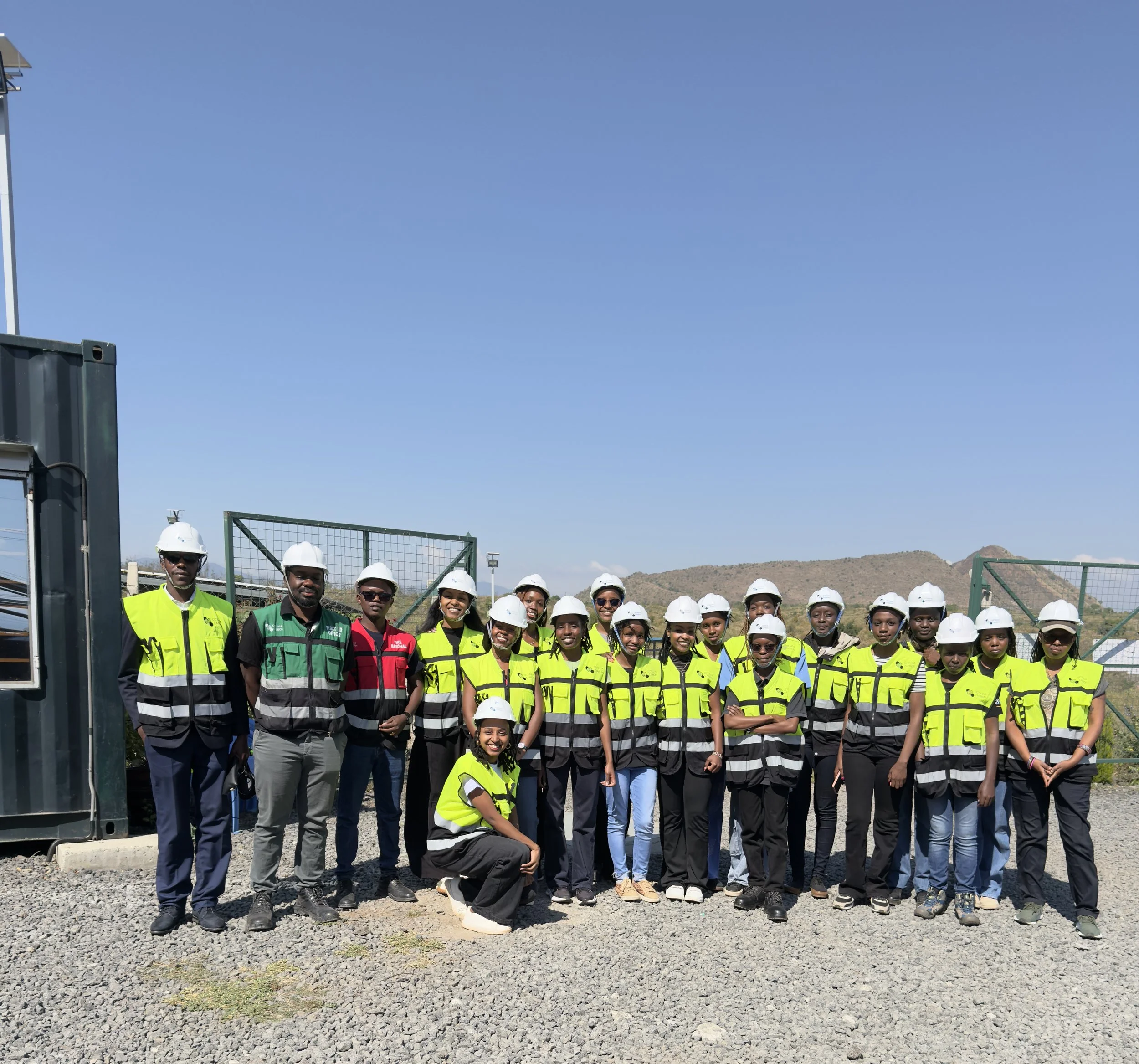
WiRE Kenya Network with the Octavia Carbon Team
The People Behind the Technology
For WiRE members, one of the most inspiring aspects of the visit was seeing women engineers actively contributing to the development of this technology.
“Visiting Octavia Carbon’s Direct Air Capture facility genuinely shifted how I think about climate action,” said Brenda Mulure, “What I loved most beyond the technology was seeing two young women engineers explain a technically complex process with such clarity and confidence. Women in energy isn’t just about having us in the room. It’s about having us own the knowledge, lead the process, and shape the thinking.”
Sandra Kirongothi reflected on how the visit connected theory with real-world application.“This was one of those experiences that brought theory to life. Seeing carbon captured directly from the atmosphere and prepared for permanent storage showed me that carbon removal is another important piece of the climate puzzle.”
For WiRE Kenya Chapter Lead Liz Mubari, the visit reinforced the importance of creating exposure opportunities: “Seeing everyone’s curiosity and excitement as we walked through the plant brought me a lot of joy. Exposure to innovative climate technologies is a powerful way to open our minds to what is possible and to show that local talent can play a meaningful role in addressing climate change.”
Sharing the Story Beyond the Visit
The conversation around women, climate technology and innovation continued beyond the plant. WiRE Kenya was featured on Kenya Broadcasting Corporation’s Women on the Move program, where members discussed the significance of the visit and the importance of increasing women’s participation in emerging climate technology sectors.
The feature provided an opportunity to share the story of Octavia Carbon’s innovation with a wider audience and highlight the role women professionals are playing in Africa’s energy transition.
Link:https://podcast.kbc.co.ke/podcast/women-on-the-move-3-july-2026/
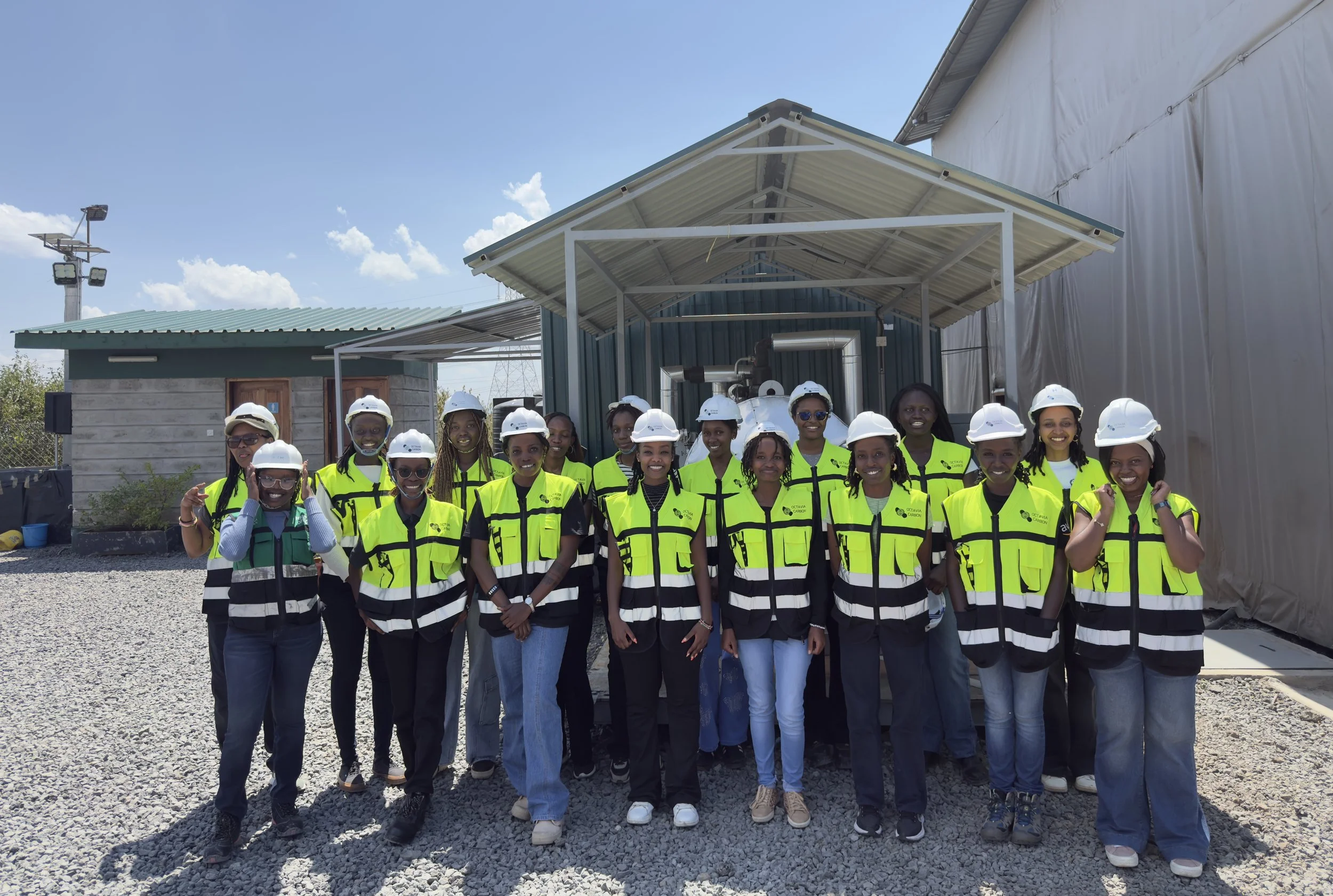
WiRE Kenya Network
Looking Ahead
As the world searches for solutions to address climate change, technologies such as Direct Air Capture will become an increasingly important part of the climate toolkit. Octavia Carbon’s work demonstrates that Africa can contribute more than natural resources to the global climate response. The continent can also contribute engineering talent, innovation and technologies developed locally. For WiRE Kenya, the visit represented exactly what the network seeks to create: opportunities for women to learn, connect, lead and participate in building the future of energy and climate solutions.
The future of climate technology is not only being discussed. It is being engineered.
The visit was hosted by
Octavia Carbon Staff
Nathalie Wati - Chemical and Process Engineer
Jeniffer Chege - Chemical and Process Engineer
Okelo Onyango - Site Project Manager
James Kisau - Safety Officer